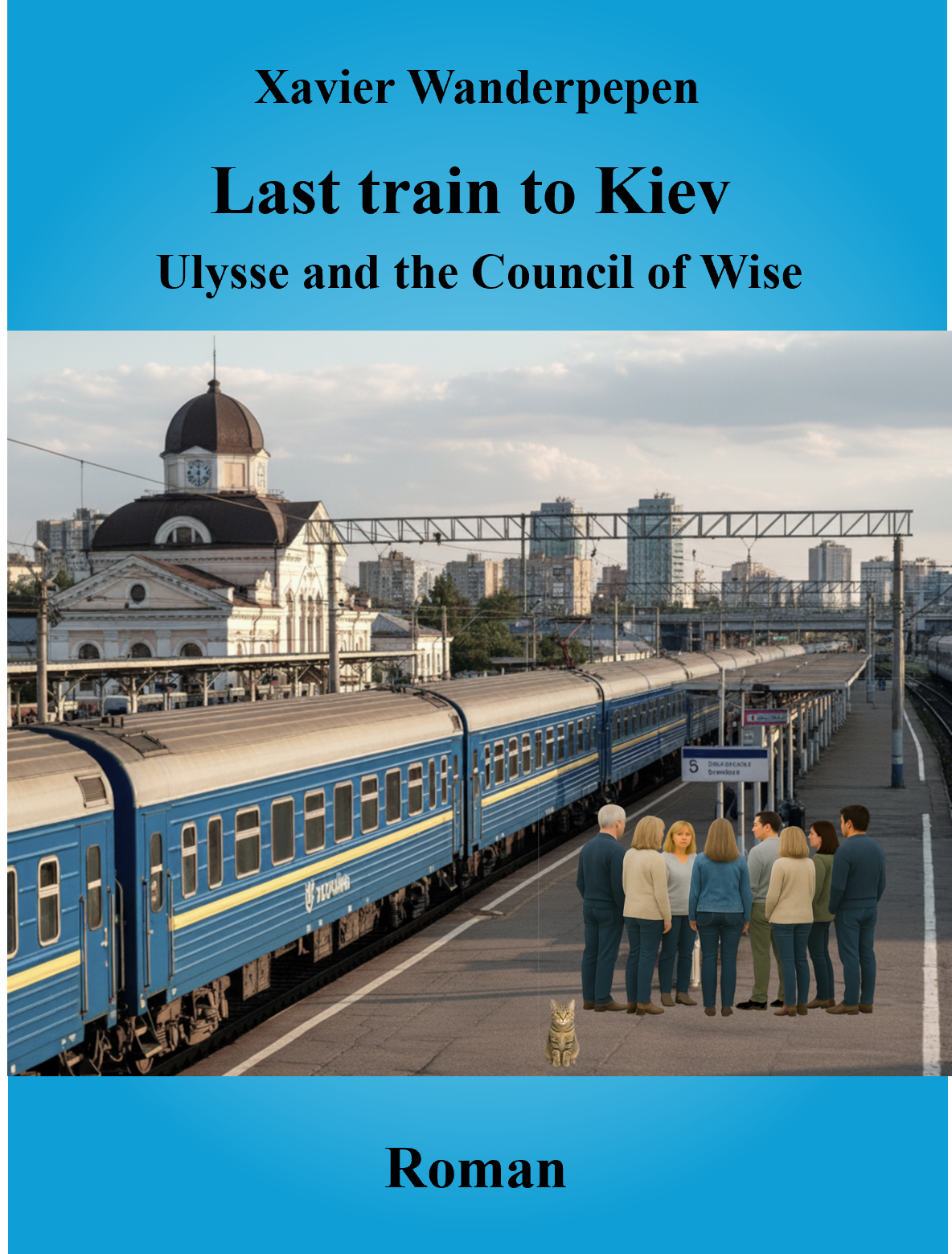
A fictional story inspired by true events
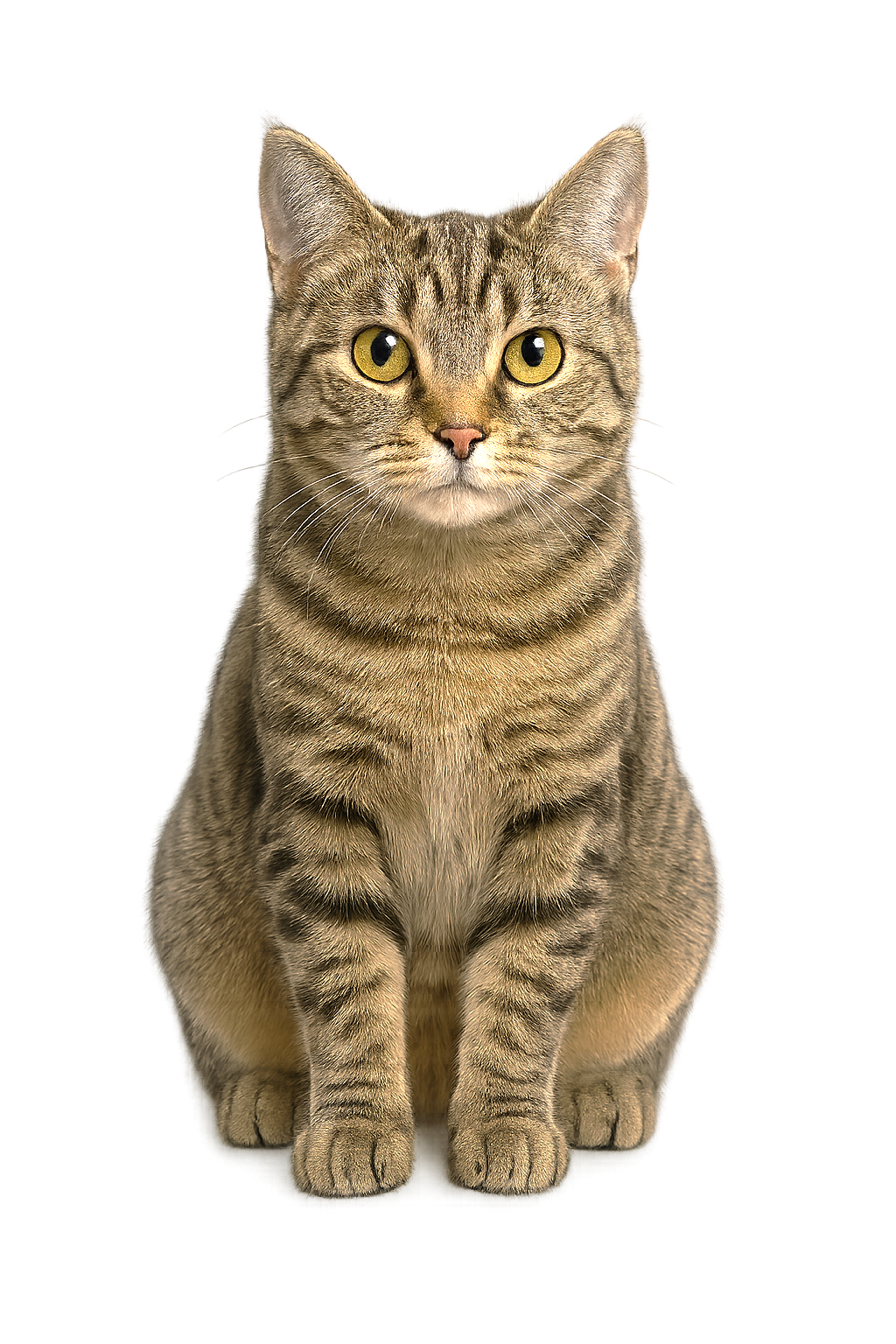
“Climb aboard this train and let yourself be transported into this universe”. Barsik the cat
The gripping story of an SNCF engineer who sees the world collapse in 2022 during the war in Ukraine
A certain perspective by Xavier Wanderpepen
Summary
This novel, somewhere between reality and fiction, recounts the journey of Ulysses, an SNCF engineer, and his two colleagues, who have dedicated their lives to building freight rail links across Europe and Asia. These trains, symbols of unity and dialogue between peoples, embody a vision of openness threatened by geopolitical tensions, particularly those linked to Russia and the war in Ukraine that broke out on 24 February 2022. The narrative unfolds like two threads that cross and then cross again: on the one hand, a story, and on the other, an introspective journey. Through this railway adventure, the protagonists invite the reader to reflect on contemporary issues combining economics, geopolitics, psychology and philosophy. The reader will be surprised to discover so many topics in this adventure, and may even find a vision or answers to them.
The novel's horizon
Balance must triumph over excess; that is the whole history of humanity.
Page 348
Zhao added:
"I believe that Ulysses went through this exciting adventure by participating in the reconstruction of a Europe that had been divided for too long. But today, he still sees the fractures, never completely healed, rekindled by the madness of some. He sees the most fragile slipping into populism, citizens trapped in overconsumption, in a Europe that has strayed into free trade with China and other powers, to the point of becoming weakened, dependent, almost hostage.
"Does he have any regrets?" asked Antoine.
"No doubt, yes... especially with regard to peoples who can be heroic but also desperate. And yet, in this adventure between Europeans, we can say that we loved each other so much.
"That's clear," said Antoine, "and that's what the reader should understand at the end.

Foreword
Mind the doors... All aboard! Bon voyage
after the fall of the Berlin Wall and the reunification of Eastern and Western Europe, many Europeans embarked on a process of reconstruction and rapprochement. Among them was a railway engineer, Ulysses, who devoted more than twenty-five years to developing rail freight transport. He spoke of building bridges between people and between countries.
But on 24 February 2022, Russia's invasion of Ukraine shattered this ideal.
At his side, his friends Volodia and Zhao also experienced this upheaval.
History repeats itself: cooperation is broken, conflicts erupt in Georgia, Donbass, and then again in Ukraine. The novel questions the fate of a Russia torn between cultural greatness and violent drift, as if the ghosts of the past were forcing it to return to the paths of yesteryear, the very ones that led millions of human beings to the gulags or the Holodomor. In the silence of a people and an immense country, whose culture, so rich and luminous, should have been enough to ward off barbarism. Once again, Russia is lost in a fury that neither reason can understand nor the heart can absolve.
This novel is a journey through stations and places where we encounter strong characters.
Ulysse takes readers on a journey through five real-life experiences, recounting the design and commissioning of freight trains. A convoy of several hundred cattle transported from France to Russia. For five years, nearly a thousand trains loaded with car parts travelled between Vesoul and Kaluga. Close collaboration with Ukraine for the rail transport of containers. The famous Silk Road rail links connecting France to China. Finally, an iconic project to build railway carriages in Ukraine. Readers will have the opportunity to enter the world of specific expertise in complex projects, as well as discover a critical and in-depth reflection on today's rail transport in France and Europe. But this is not just a story about a profession; beyond the work of designing freight trains, it is an adventure.
As in any company, training seminars, alternating with team assignments, lead them to explore the mechanisms of human thought and behaviour. During a presentation to students in Odessa, they realise that all professional environments are deeply linked to the psychology and philosophy of each individual. They then begin collaborating with four Ukrainian professors and experts, who open their eyes to a deeper understanding of the world.
They later came to understand that these mechanisms govern everyday actions as well as major political movements, social structures and the subtle balances of a nation's thinking.
At the end of their fifth adventure, the three SNCF engineers find themselves in Kremenchuk, Ukraine, where they also plan to meet their university professor friends, when the Russian attack of 24 February 2022 takes them by surprise. They are forced to stay in a hotel for a few days. This confinement imposed by the war leads them to discuss the world and its divisions once again. Ulysse, the progressive, questions the nature of good, while Volodia, who is more conservative and claims to understand Russia, tries to defend his choices, convinced that they are legitimate. Zhao, who is more reserved, becomes an observer of this dialogue.
Little by little, the narrative shifts towards existential questions: what principles guide our judgements? What can or cannot justify such a war? Faced with the brutality of reality, painful truths emerge.
These exchanges gave rise to a reflection. With a touch of humour, they called it "The Kremenchuk Process": an ethic of thought based on responsibility, integrity and critical thinking. A call to question not only the content of our thoughts, but also the way we think. Thanks to this reflection, Volodia overcomes his nostalgia and ultimately recognises that Putin's propaganda is incompatible with his ideals of peace, justice and authentic spirituality.
Time passes. One question remains: what will remain? Perhaps the humanist torch that is Europe, which has become an ideal for the fighters and children of Ukraine.
As for the Wise Women of Kremenchuk, they are a group of experts, university professors: Tetyana, the psychologist; Yuliya, the economist; Larissa, the journalist specialising in geopolitics; Maryana, the philosopher; and Iryna from the University of Odessa. They form a discussion circle with Ulysses, who is concerned with the truth; Ilona, the translator and confidante; Volodia, the rebel plagued by doubts; and Zhao, who is curious about things and has a very Chinese sense of humour.
The recluses of the old hotel in Kremenchuk, as they call themselves, talk about science, war, the Russian economy, God, psychology, philosophy, balance and harmony, the need for adaptation, wisdom, trust and Europe.
The reader will be surprised to discover so many topics in this adventure, and may even find a vision or answers to them.
The author offers two intertwining storylines: on the one hand, a story, like so many others, of those business adventurers who set out to conquer the lands of the East in the 1990s; on the other, a journey of reflection, offering a glimpse into contemporary concerns through the horror of the war in Ukraine, that shock of 24 February 2022.
What reader has never experienced, in their work, the entanglement of professional tasks and human relationships, which are constantly intertwined, for better or for worse? Our Sages of Kremenchuk are driven by one obsession: understanding.
Throughout this story, the reader will learn that all beneficial action stems from an understanding of how the human mind works.
Ulysse is French. Volodia was born in France to parents of Russian-Ukrainian origin. Zhao, born in China, is also French; he arrived with his parents when he was a child. Both are French with dual cultures, like so many others. They were young recruits in the company. Their mission? To collaborate with Ulysse, the project manager. Two trajectories, still unclear, crossed by chance in their professional destiny. Thus, Volodia and Zhao spent several years working with Ulysse, helping him on various projects while learning the ropes of their profession.
The three protagonists experienced so many transformations and exchanges, exploring the complex relationships between Russia, Ukraine, France, Europe and China, through five stories devoted to the development of freight trains. All these missions told a story in which goods were not just goods in transit, but living signs of the interconnectedness of the world.
And yet, as twenty years passed like landscapes sliding by the windows of a train, as capital cities revealed themselves one after another, through projects and negotiations sealed with a more or less sincere handshake, Ulysses, Volodia and Zhao, contemplating this incessant movement that seemed to abolish distances and promise unity, could not ignore, deep down, that at the very heart of these exchanges there was also a palpable unease.
For behind this flow of goods, behind these symbols of cooperation and progress, a dull rumbling was rising: that of buried antagonisms, misunderstandings never quite dispelled, rivalries that, it seemed, nothing could appease. And in the hum of the moving carriages, there was already a distant but inexorable echo of a world that was gradually beginning to fragment once again.
***
References and quotations
Winston Churchill. British statesman and writer, born on 30 November 1874 and died on 24 January 1965 in London. "The whole history of the world is summed up in the fact that when nations are strong, they are not always just, and when they want to be just, they are no longer strong"; "Democracy is a bad system, except for all the others"; "The best argument against democracy is a fifteen-minute conversation with the average voter"; "Courage is also sitting down and listening!"
Alain Souchon. French-Swiss singer-songwriter and actor, born on 27 May 1944 in Casablanca, Morocco.
Montesquieu. Charles Louis de Secondat, Baron de La Brède et de Montesquieu. Magistrate, political thinker, precursor of sociology, French philosopher and writer of the Enlightenment, born on 18 January 1689 in La Brède (Guyenne, near Bordeaux) and died on 10 February 1755 in Paris. He said that "trade softens barbarous manners", Source: The Spirit of Laws (1748), Book XX, Chapter 1: "Trade cures destructive prejudices; and it is almost a general rule that wherever there are gentle manners, there is trade; and wherever there is trade, there are gentle manners."
Abraham Maslow. Born on 1 April 1908 in New York and died on 8 June 1970 in Menlo Park, California, he was an American humanistic psychologist, considered the father of the humanistic approach to psychology.
René Girard. Born on 25 December 1923 in Avignon and died on 4 November 2015 in Stanford, California, he was a French anthropologist, historian, theologian and philosopher.
The scapegoat is excluded or sacrificed, temporarily restoring social order. Girard studied this process throughout history, mythology and religious texts, particularly the Passion of Christ, which he interprets as the revelation of this unjust mechanism. He also showed that collective violence is at the root of certain cultural and religious structures.
Umberto Eco. Italian academic, philosopher, semiotician and writer. Born on 5 January 1932 in Alessandria, Piedmont, and died on 19 February 2016 in Milan.
"Social media has given a voice to legions of idiots who previously only spoke at the bar after a glass of wine, without causing any harm to the community. They were immediately silenced, whereas today they have the same right to speak as a Nobel Prize winner. It's the invasion of the idiots."
Niccolò Machiavelli. Italian Renaissance humanist born on 3 May 1469 in Florence and died in the same city on 21 June 1527. A theorist of politics, history and war, but also a poet and playwright, he was a civil servant in the Republic of Florence for fourteen years, during which time he carried out several diplomatic missions, notably to the papacy and the French court. During all these years, he closely observed the mechanics of power and the interplay of competing ambitions. Machiavelli is, along with Thucydides, one of the founders of the realist school of international politics. Two major books in particular ensured his fame: The Prince and Discourses on Livy. "The end justifies the means." - The figure of the 'mad' or unpredictable man, a tactic designed to sow uncertainty. By appearing confusing, even dangerous, a head of state can paralyse his opponents and make any attack risky. This is not true madness, but a calculated display of power.
Thucydides. Athenian politician, strategist and historian, born around 460 BC. He died between 400 BC and 395 BC. His main work is The Peloponnesian War, an account of the war between Athens and Sparta between 431 and 404 BC. It is notable for its historical rigour, comparable to the works of Herodotus. For him, the underlying drivers of human action are fear, interest and honour, the forces behind conflicts.
"Thucydides' trap" is a term used to describe what happens when an emerging power threatens a dominant power: it creates fear, tension and often conflict. Thucydides' trap highlights the fact that the perception of threat is often as important, if not more important, than the objective reality of power relations.
Maurice Merleau-Ponty. French philosopher, born on 14 March 1908 in Rochefort-sur-Mer, died on 3 May 1961 in Paris. Phenomenology of Perception, a reflection on how we perceive the world. He confirms what even you know: perception is not a simple passive recording of sensory stimuli or an intellectual construct. For him, perception is an embodied act, linked to our body and our being-in-the-world. He asserts that we do not perceive the world as a sum of objective information, but as a global experience, structured by our body and our engagement with the environment.
Clausewitz (Carl Philipp Gottlieb von Clausewitz), born on 1 July 1780 in Burg, near Magdeburg, and died on 16 November 1831 in Breslau (now Wrocław, Poland), was a Prussian general and military theorist. A prolific writer and strategist, he is the author of a major treatise on military strategy entitled On War, published posthumously by his wife Marie von Brühl from his notes.
He introduced fundamental concepts such as the "fog of war," which refers to the uncertainty, confusion, and unpredictability of the battlefield, and "friction," which refers to the obstacles that prevent the smooth execution of military plans. He also emphasised the importance of morale, willpower, and centralised command.
Karl Marx. Philosopher, economist, historian, sociologist, journalist, theorist of revolution, socialism and communism. Born on 5 May 1818 in Trier and died on 14 March 1883 in London. "Those who do not know history are doomed to repeat it."
Paul Valéry. French writer, poet and philosopher. Born on 30 October 1871 in Sète and died on 20 July 1945 in Paris. "There is something worse than falsehood, and that is truth mixed with falsehood."
Barbara Stiegler. French philosopher. Specialist in Nietzsche's thought and political philosophy. She has written extensively on neoliberalism, which she identifies as a political project based on the imperative of adaptation. Born on 3 August 1971.
In the 1930s, National Socialism turned social Darwinism into an oppressive tool in the service of Nazism: the people had to adapt at all costs. Conversely, other thinkers saw it as a justification for liberalism: let things happen, those who adapt will prosper, the others will advance at their own pace and in their own place. This vision became taboo, traumatised by history and the crises of 1929.
Jean-Jacques Rousseau. Writer, philosopher and musician. Born on 28 June 1712 in Geneva and died on 2 July 1778. In The Social Contract, he develops the idea that trust is essential for establishing a just and legitimate society.
Paul Ricoeur. French philosopher. Born on 27 February 1913 in Valence and died on 20 May 2005 in Châtenay-Malabry.
Spinoza Baruch Spinoza. Born on 24 November 1632 in Amsterdam and died on 21 February 1677 in The Hague, he was a philosopher who lived in the Netherlands and was of Portuguese origin.
Nietzsche Friedrich. German philosopher, philologist, cultural critic, composer, poet, and writer. Born on 15 October 1844 in Röcken and died on 25 August 1900 in Weimar.
The "death of God" is the end of absolute values.
Passive nihilism is depression, the loss of meaning.
Active nihilism is creative destruction.
And the superman is the one who creates his own values and says "yes" to life.
"No happiness, no serenity, no hope, no pride, no enjoyment of the present moment could exist without the faculty of forgetting. Forgetting is necessary for life: without it, the mind would be paralysed by the weight of the past."
Nietzsche speaks of adversity and suffering as drivers of personal transformation and self-improvement. "What does not kill me makes me stronger," he said, as if promising that even pain can nurture greatness.
Heinz Wismann. German philosopher and philologist born in 1935 in Berlin, specialist in hermeneutics and the history of scholarly traditions. He explains in essence that Europe is a critical spirit turned initially against itself. He says that it is the only civilisation he has studied that identifies with something that is a break with itself. That is why Europe makes the world uncomfortable, because it carries with it an injunction to critically examine who we are or who we want to be. This spirit of contradiction makes the world uncomfortable.
Alphonse de Lamartine. French poet, novelist, playwright, historian and politician. Born on 21 October 1790 in Mâcon and died on 28 February 1869 in Paris: "The book of life is the supreme book that cannot be closed or reopened at will. We would like to return to the page we love, but the page where we die is already under our fingers.
Ivan Pavlov. Russian physician, researcher and physiologist, winner of the Nobel Prize in Physiology or Medicine. Born on 14 September 1849 and died on 27 February 1936. He studied the phenomena of conditioned automatic responses in humans and animals. These responses result from repeated experience, often beyond the conscious control of the subject. Pavlov highlighted the power of habit, vulnerability to manipulation, and the importance of critical thinking in freeing oneself from these reflex responses.
Pierre Corneille. French playwright and poet. Born on 6 June 1606 in Rouen and died on 1 October 1684 in Paris. In Le Cid: To conquer without risk is to triumph without glory. For it is adversity that gives value to victory, and only challenges met with courage engrave exploits in history.
The author
The author was born in 1963. Last Train to Kiev is his first novel, combining adventure storytelling with reflections on Europe. It blends railway realism, geopolitical commentary and inner exploration. An eclectic thinker, he worked for 40 years at the SNCF, France's national railway company, in international rail transport.
Trains China
Some time later, in 2019, Nikos, Philos and Andry left Frankfurt for other assignments. Phileas tasked Ulysses and Zhao with responding to growing customer demand: the transport of freight containers by train between China and Europe. This new mode of transport reduced delivery times by around two weeks compared to sea freight. The Frankfurt office now displayed a new SNCF subsidiary brand name: Forwardis.
Turning to Ulysses, Phileas said with a smile:
"My friend, 'the Frankfurters' have been chosen for another mission. I suggest you take charge of this new China service. You already know almost everything there is to know about transport with Russia and Central Asia, so China, which is right next door, shouldn't be much more complicated."
It was a humorous remark, but Ulysses knew he could count on Zhao, whose imagination was stimulated by the challenge. This project would finally allow him to combine his work with his more intimate world.
Ulysse replied:
"I accept this mission. But you know, I'm not getting any younger, and I'm starting to feel the strain. I will do my best, to the best of my ability. That said, we now have tools that we didn't have before. At the seminar in Odessa, our colleagues from Ukraine taught us how to master an approach to cultural concepts. I believe that all of this will be very useful to us with our new Chinese friends.
The mission was to reserve seats on trains that were already in service, launched a few years earlier. It also involved finding partners in China and, above all, coordinating transport operations in this country, which was still unfamiliar to Ulysse, a terrain rich in challenges and questions.
Zhao quickly identified several local transport companies and gathered valuable contacts. This new development generated real enthusiasm among both Western logisticians and their Chinese counterparts. Fortunately, it was now easy to find young professionals fluent in English in these companies.
"Eight years ago," said Phileas, "I went to China where I attended a few conferences on the development of rail freight with China's neighbouring countries: Kazakhstan, Russia and Mongolia. We were accompanied by an English-speaking interpreter who never left our side. I always suspected that her job was also to keep an eye on us. Even our regular taxi driver in Beijing made us cautious, and we avoided certain comments, fearing that he might understand French.
Zhao burst out laughing:
"You were right out of George Orwell's novel 1984! But be careful with your fantasies... China has opened up since then, even if surveillance remains omnipresent. We are observed without really realising it, and eventually we stop paying attention to it. It's too exhausting to be constantly on guard, so people get used to it.
Within a few months, Ulysse and Zhao had managed to organise transport for several regular customers. They had also identified and listed the standard operating procedures, the famous SOPs, which Zhao, methodical as ever, had carefully filed in his computer system. The list grew longer, now containing some fifty essential points: container rental, loading, documents, goods checks, customs, train seat reservations, shipment tracking, arrival preparation, delivery truck management, and so on.
In logistics and IT jargon, these essential points were called legacies, and each legacy was itself subdivided into a dozen specific steps called segments. All of this constituted the links in a vast logistics chain, forming a larger unit within this complex system. All of these links interacted with each other like clockwork, and solutions had to be put in place to control each segment. This was the new mission for Ulysse, Zhao and their partners.Top of form
Until then, containers had been transported from China by train to Poland, Germany or the Netherlands, where they were then redirected to other trains or lorries to reach France. The idea of a direct train between Paris and a Chinese city, which would serve as the point of departure and arrival for the whole country, was now taking shape. Several Chinese regions had expressed their desire to develop this rail link with France. For them, Paris represented a summit, an emblem on which to raise their flag, and achieving this feat would bring prestige and recognition in China to whoever was behind it.
After lengthy discussions with his contacts in China, Zhao explained to Phileas and Ulysses how these Chinese-subsidised trains worked.
"The trains are organised by a region of China that wants a rail link with Europe. That region or city in China is the principal and will subsidise each container, because if the customer has to pay the actual cost, compared to the price of sea freight, no one will accept such a difference. Last year, in 2018, if we calculate eighteen container trains per day, the total subsidy from the six main regions of China reached eight hundred million dollars, which is about three thousand dollars per container.
"What?" exclaimed Phileas, "$3,000 per container? That's a huge amount, how can they possibly make a profit?"
"China has such a large trade surplus," replied Zhao, "soon it will be one trillion dollars a year, so they can take one or two per cent to finance the transport that allows them to export to their customers.
Ulysses spoke again:
"With these New Silk Road trains, or now, according to the new name, Belt and Road Initiative, China is deploying a vast infrastructure network aimed at connecting the world: economic corridors, international transport routes, digital highways, railways, roads, ports... An ambitious, almost utopian project, reminiscent of a United Nations project. I read that President Xi said: 'Trains speeding along the railways, cars travelling on the roads, flights connecting different countries, cargo ships sailing the waves and e-commerce bringing so much convenience to people have all become symbols of international trade in the new era'. It all sounds wonderful, but behind these exchanges lie dependencies: there are those who decide and those who suffer. A real lesson in power. Russia controls part of Europe, notably Germany, thanks to its gas. America shapes us with its soft power and technology. As for China, it reigns supreme on our supermarket shelves. That's what happy globalisation is all about!
Zhao couldn't help but smile:
"Now Ulysses is giving us a lesson in geopolitics!"
Phileas replied, amused:
"Very well, Ulysses, you're participating in the war of the worlds, and I'm going to have to brush up on my knowledge by playing board games about geopolitical issues with my son!"
Chinese delegations frequently visited Europe, where several countries had already launched their direct trains, with stations in Malaszewicze, Lodz, and Duisburg, the largest rail freight station in Europe, as well as Tilburg, Liège, and Madrid. France was not at the forefront of countries collaborating with these trains. It must be said that France was not the main gateway for products from China. Northern Europe, with the ports of Antwerp, Rotterdam, Hamburg and its industries, is the main logistical bridge with China. It is mainly from these ports that products from China then arrive in France. Thus, a delegation from Chengdu, consisting of fifteen people whose true status and influence remained unclear, announced its visit and was awaited by the SNCF team. There were to be two meetings at SNCF headquarters. They unfolded like an ancient ritual , the choreography of which everyone knew: measured exchanges, polite to the point of vacuity, the head of the Chinese delegation reading a speech extolling, in incantatory fashion, the benefits of cooperation between Paris and Beijing. The French side, keen to present its work methodically, gave a presentation with Western rigour, full of statistics, financial projections and assumptions about the project's profitability.
The Chinese guests followed the presentation with an attention reminiscent of children enjoying a shadow puppet show, touched but not convinced, flattered but not committed. Zhao, with foresight, whispered to Ulysses:
"Everything we've done proves to them that we've worked hard and that we're serious, but they don't understand any of it, or rather, it's not their concern. They're not here for that; they were told to come, so they came. In China, when it comes to government agencies or state-owned enterprises, those who travel are never the decision-makers. After the second meeting, the team invited our prestigious travellers to a small restaurant in the evening. It was 10 July, the weather was beautiful in Paris, the restaurant was located in a small street at the foot of the cathedral, and its inimitable charm left the guests amazed by the old-fashioned beauty of the place, the cobblestones worn by centuries of history and anonymous footsteps, and the imposing majesty of the cathedral watching over the surrounding streets, all of which gave the scene an almost theatrical aura. There were few people there that evening, which made the restaurant owner's suggestion even more solemn: to go down and visit the cellars, which were said to be older than the cathedral itself.
There, in the dim light where the centuries seemed to have fallen asleep, a reverent silence descended. For a moment, everyone seemed suspended between the weight of the past and the uncertainty of the future. Then the guests returned to the dining room and suddenly the ice broke, glasses clinked in enthusiastic toasts to the greatness of China, France, and the friendship that everyone knew, without daring to say so, was perhaps just another backdrop on a summer evening. Some time later, it was the turn of the city of Jinhua, twinned with Châteauroux in France, to make its move. Ulysse and Zhao travelled to this peaceful city in central France. The Chinese delegation was on familiar ground: in recent years, Chinese investors had acquired agricultural land and buildings at Châteauroux freight airport and had even founded a Franco-Chinese school.
Jinhua saw the establishment of a regular rail link between the two cities as an interesting opportunity. Located in the heart of France, Châteauroux could become a strategic distribution point. The setting of this small town facilitated exchanges between local elected officials and a few companies. In the evening, a convivial reception was organised in an old chapel, where the atmosphere was warm and welcoming.
However, Ulysse and Zhao quickly realised what was really at stake: if China really wanted to make this project a reality, it would have to invest several million euros and hope, after a few years, for a return on investment and a profit. But a municipal councillor expressed his doubts:
"You know, the Chinese have made a lot of promises here. But how many projects have actually come to fruition? How many jobs were announced, and with what results?"
Zhao tried to answer him:
"Succeeding in Europe is a challenge for the Chinese. Some have made small fortunes in China, but what works there, with six per cent growth, is much more complex here, in an already saturated market. Take the example of Chinese investment in French vineyards: to succeed, you have to aim for excellence and precision. However, the Chinese excel more at mass production and conquering markets in sectors where China is ultra-competitive. Ulysses and Zhao then realised that the delegation did not yet have a clear strategy or detailed plan. But for a first visit, this seemed normal to them: the main aim was to establish initial contacts. The time for concrete studies and concrete decisions would come later.
It seemed that the Chinese delegations had widely publicised the memorable welcome they had received in Paris and Châteauroux, because throughout the year, other groups followed suit with similar study trips. The cities and regions of Yiwu, Chongqing and Zhengzhou sent their representatives, and each visit followed the same rituals, to the point of becoming tiresome.
Zhao reflected on the sequence of events:
"Now that we have met all these people here, we should go to China. I think the most interesting opportunities are in Chengdu and Jinhua. What do you think?"
Ulysses nodded:
"I agree. To move things forward, we need to go there and try to meet with high-level decision-makers."
Zhao confirmed his analysis:
"All these visitors are senior executives, of course, but none of them really have the power to make decisions. Our efforts to win them over are of little use, except to fuel the reports they will write when they return. The worst thing is that I don't know what they actually convey to their bosses. The important thing for them is to write what their bosses want to read, not what they really think. In reality, these trips are more like rewards for them: getting a business trip to Paris or France is a real honour.
Then came the day of departure for China. Ulysses and Zhao were accompanied by three colleagues from the SNCF, including Phileas, the director in Frankfurt, Edwy, the commercial director in Paris, and Xiao and Yan, two Chinese colleagues also based in Paris. Their role was to assist Zhao with translations, discussions and interpreting exchanges in order to convey messages effectively.
Zhao had said that a European delegation to China must be large in order to be credible, with bosses to emphasise the importance of the trip. He had business cards made in Chinese with director titles.
Phileas called Edwy in Paris:
"Tell me, in five weeks, would you be free to accompany us to China? We need a boss who is from Paris."
"Why are you thinking of me?" asked Edwy. "I feel like I'm the backup solution."
"It's because with you, impossible missions are less hopeless, and I need a boss from Paris to take responsibility for any failure.
"Well, let's go to China. I'll be there."
It had been agreed that, during official meetings, Edwy, Phileas and Ulysse, as French representatives, would confine themselves to customary compliments about China and a brief presentation of French expectations. On the other hand, more direct messages and actual demands would be addressed by Zhao and his Chinese colleagues, in private, during meals or other informal meetings.
The trip, scheduled to last about ten days, began with a stop in Chengdu, in the centre of the country, followed by Jinhua, in the east, before ending with two days in Shanghai to meet with companies.
Upon their arrival in Chengdu, the reunion with their Parisian contacts was warm.
The first evening began with an invitation to a restaurant. Ah, Sichuan cuisine... The memory never fades of the swirls of this spicy cuisine, unfolding in a symphony of fiery flavours, where chilli ignites the palate like a memory of yesteryear returning without warning, the hot pot broth, steaming and simmering in its copper cauldron, cradling the thin slices of beef and tofu. With an almost childlike splash, Sichuan pepper exudes its citrus notes, while the curled noodles envelop the tongue in an almost loving embrace.
Everything here is a dance of fire, respite and comfort. Under the red lanterns of the stalls, one tastes the intoxication of endless evenings, where each bite is a journey, a trip back in time, a sensation that lingers long after the last spice has left the palate.
During the meetings, discussions resumed on points already discussed in Paris, enriched by new studies and analyses. However, nothing truly new emerged from the exchanges. Impatient, Ulysses confided his annoyance:
"They are very nice, but I would like us to finally get down to business with real working meetings. With all these meetings piling up, I feel like they are trying to lull us to sleep and that at the end of the trip, no concrete decisions will have been made. All this is not worth such a trip!"
As usual, Zhao played his role as analyst:
— Don't be in too much of a hurry. Everything we do here is important, even if, in the end, nothing comes of it and we have to consider Chengdu a failure. You know very well that the decision to launch a rail link and commit several million euros in funding will probably only be taken by the provincial governor and the mayor of Chengdu, and perhaps even with the agreement of the provincial party secretary.
Ulysses raised an eyebrow:
"That's exactly what worries me. As with Jinhua, they seem completely unprepared: no profitability study, no business plan... or else they're not showing us anything. Under these conditions, they'll never launch these trains."
Zhao smiled slightly before replying:
"Don't forget that these are government agencies, not private companies subject to profitability requirements. Their goal is not to generate immediate profits, but to deploy soft power and strengthen their presence in foreign markets. By setting up these trains and logistics solutions, they are facilitating the export of Chinese products to Europe. Their logic is that of a government building infrastructure: they are allocated a budget, and they have to spend it, whether on roads, railways or other projects. Profitability is not the priority, because, out of the total volume of investment, some initiatives will inevitably end up being profitable, even indirectly. The trains that have been launched to Germany follow the same economic patterns, and yet they are going ahead.
On the last day, a meeting was scheduled at Chengdu City Hall with the Deputy Mayor responsible for Transport and Communication. The aim was to sign a letter of intent, or memorandum of understanding.
Ulysses and Phileas were enthusiastic. Phileas said to his colleagues:
"This time, I think we're on the right track! Signing a document with the Deputy Mayor of a city of twenty million inhabitants means that they are committed."
But Xiao and Yan immediately dampened their hopes:
"Oh no, in our country, that doesn't mean anything! We sign documents all the time, often without any real significance. It's just a formality, a written record... but it doesn't commit them to anything."
Exhausted by three days of meetings and visits to terminals, Ulysses concluded resignedly:
"Well, since everything depends on unpredictable and not always rational decisions, it's better not to get our hopes up too much. That way we won't be disappointed."
The next day, the French delegation flew to Hangzhou, in Zhejiang province, before taking a train to Jinhua. This trip marked the continuation of the exchanges that had begun a few months earlier in Châteauroux. The welcome there was even warmer than in Chengdu. More provincial and less of a megacity than Chengdu or Shanghai, Jinhua, with its five million inhabitants, naturally facilitated contacts, as Phileas confided after his first impressions.
The same meeting rituals followed, but this time, unusually for a Chinese administration, the city of Jinhua had prepared a presentation document detailing the project's potential and objectives. This document, given to the French delegation, impressed Zhao: he considered it well-designed and professional. Thanks to this solid working basis, everyone was confident. What's more, the twinning of Jinhua and Châteauroux meant that the project was almost bound to succeed, thanks to the impetus provided by the mayor of Jinhua and the provincial authorities.
The team therefore proposed working together on a simulation of the future train, to be submitted to the authorities for approval. Zhao took charge of the subject with his Chinese counterparts, considering it easier to communicate with them in their native language. He then explained how to apply his speciality of standard operating procedures. After two hours of discussion, a seven-page list of topics and questions was drawn up. Each stage, from the loading of goods in China to their delivery in France and vice versa, had to be carefully analysed.
However, the Chinese partners expressed some reservations, fearing that they were moving too quickly when no official decision had yet been made. To reassure them, Zhao explained:
"All this work is time saved. If the project is approved, we will already have a foundation in place to launch the first trains."
Phileas then shared his feelings with his colleagues:
"I feel like I'm reliving what we experienced a long time ago with our Eastern European partners: two worlds coming together with very different approaches."
Zhao nodded before adding:
"Yes, but here we are in China. No one can tell the Chinese how to work. They are interested in our methods, but they will not adopt them. Firstly, because they do not make any decisions themselves, and secondly, because no one would dare suggest to their superiors that they should apply our methods."
He illustrated his point with an example:
"Take the issue of dangerous goods, such as batteries or certain low-risk chemicals. They are banned on trains connecting China to Europe, whereas they are accepted everywhere else, including in China. If you try to find out who made this decision and why, it's impossible to determine. This is what we call here: the parrot ladder."
"The parrot ladder?" asked Phileas in surprise.
"I'll explain," replied Zhao. "Let's say that a railway committee responsible for these matters in Beijing decides that lithium batteries will only be accepted if their packaging is fire-resistant. When it passes this directive on to the departments responsible for implementing it, they add a new precaution to ensure that their superiors see them as diligent. Then another department adds another layer. At the end of the process, to be sure of eliminating all risk, the person at the end of the chain realises that lithium batteries must be banned outright. This is how the Chinese administration works: ultimately, no one really makes any decisions. Most civil servants do not seek to ensure the success of projects, but rather to please the Communist Party and, above all, to avoid any problems that could land them in prison. And for that, the best strategy is to take no risks. Conversely, if a measure is deemed urgent, those in power can decide within a few hours, and then everyone complies immediately for fear of ending up in prison again if things are delayed.
"Oh yes, I see!" exclaimed Phileas with a laugh. I remember when I started working after university, there was a notice posted in the canteen with the internal rules. It said: Article 1: the boss is always right. Article 2: if the boss is wrong, then Article 1 applies immediately. I now realise that it was probably a translation from Chinese! The group of friends burst out laughing. Phileas added, "At our place, it's the complete opposite! To make a quick decision, we don't rush into things: we set up study groups, ad hoc committees, and carry out impact analyses. Ha ha!
During all these trips, over more than twenty years, Ulysses confided that what is a universal value of the Eurasian continent is indeed communal meals, local specialities shared by hosts who are proud, and rightly so, of their country. On the last evening in Jinhua, a dinner was organised for the French delegation, which was leaving the next day. Before the meal, there was a tea tasting ceremony in a small covered garden, under the soft light filtered by a curved tiled roof, where a living tableau unfolded, with water, stone and wood interacting in silent harmony. A winding stream murmured between rocks weathered by time, where tea slowly brewed, filling the air with a scent of serenity and eternity.
Then, in another room, local Chinese cuisine was once again in the spotlight, a symphony in which each dish exuded the scent of exoticism and a dreamlike childhood. But for our French friends, Edwy, Phileas and Ulysse, despite their experience and extensive travels, some dishes were difficult to enjoy: octopus swimming in a dark sauce, which Ulysse described as rubbery, but the garlic and ginger helped to bring out the flavour. Then came the chicken feet, cut into small pieces. What is there to eat? thought Phileas, who tried to gnaw on whatever flesh and spices he could find. Fortunately, there were other dishes on the rotating table: fish covered with a layer of spring onions and coriander, simmering under the aroma of soy sauce; Chinese noodles soaked in a fragrant broth; and excellent ravioli, each bite of which revived the echo of an eternal Orient.
Everyone was full of praise for the food, and Ulysses didn't hesitate to tell everyone with a mischievous smile:
"Edwy really enjoyed the octopus and chicken feet, and if possible, he'll be having seconds."
The hosts, who knew the tastes of Europeans, understood the humour, and one of them , added :
"That's because, Edwy, you're Chinese at heart. We'll prepare a box of these delicacies for your breakfast tomorrow."
Edwy whispered to Ulysse:
"Tomorrow, I'm going to make you eat this for breakfast at the hotel."
The evening before leaving for the hotel, the manager of Jinhua station told his assistants, Yan and Xiao, that the project was progressing well. He estimated that the first train trials could be carried out within a few weeks.
The next day, the team took the train to Shanghai, where two meetings with major transport companies were scheduled. The atmosphere there was completely different. Shanghai, an ultra-modern city, contrasted sharply with Sichuan. Here, the mentality was closer to that of Europe and the West. In these companies, the executives all spoke English, some even French. Discussions followed the same codes as in Europe, with everyone able to express their opinion. Zhao explained:
"Here is the real, conquering China. These companies are moving forward by taking risks with their own money, not with the state's." Efficiency is a priority, and projects are rolled out at an impressive speed. The leaders have a clear vision of their ambitions. Many young people have travelled, sometimes adopting a start-up mindset, and they are better paid. They can put forward ideas, and it is this China that has made the country's exports so successful, much more so than our colleagues in the cities of Chengdu or Jinhua.
A few weeks later, the city of Jinhua announced the departure of the first train to France. The chosen destination was a station in the south of Paris, in Valenton, where a container terminal already existed, receiving and dispatching freight trains on a daily basis.
The Châteauroux project was postponed due to the necessary investments, which were discussed during visits to the city twinned with Jinhua. For Ulysse, this development was predictable: this first step in Paris was sufficient, and, if the future allowed it, a more ambitious project could see the light of day.
Thus, after two months of testing, the trains were running regularly. The project was a success, and the organisation was put in place with dedicated teams. Every Thursday, a train departed, while the one from the previous week was already crossing Russian territory, and the one shipped two weeks earlier was entering China. A veritable railway conveyor belt between Paris and China was up and running, operating in both directions. A weekly train actually involved the continuous management of six to seven convoys in circulation. Freight trains between France and China were thus launched, and the press regularly reported on this success.
At the beginning of 2021, in a café on Charlottenstrasse in Berlin, a small group of colleagues gathered around Phileas, Ulysses, Zhao and others. Phileas then said to Ulysses:
"So, do you remember? Before this adventure with China, I said to you, 'You're going to take part in this war of the worlds.' So, who won?"
Ulysses replied:
"This war is far from over. It's only just begun, but the first battles have been won by China."
Zhao added:
"Yes, but Europe is also benefiting from it. Otherwise, no customer would pay more to send their goods by train rather than by ship.
"Do you think Europe is really winning?" replied Ulysses. "What's it all for? As Souchon's song says,which I know by heart, we have forgotten that we are sentimental crowds thirsting for true ideals... 'The rose we are offered, to have the quantities of things that make us want something else. We are led to believe that happiness is having full cupboards. Derision of us derisory, because we are sentimental crowds. We thirst for ideals, attracted by the stars, you have to see how they talk to us. These cardboard boxes give off an air of washed-up, useless, sad people, and without any advantage, we are inflicted with desires that afflict us. Let's not kid ourselves, we are born to be fools, when in fact we are sentimental crowds thirsty for ideals.
Zhao added with a smile:
"Have you become a depressive degrowth advocate?"
"Not at all," replied Ulysses. "I'm not a degrowth advocate... unless the end of the world comes one day. But I remain optimistic: there is no end of the world, because every day a different world appears. Everything changes imperceptibly, a few millimetres at a time, and then, twenty years later, we wake up and realise that everything has changed. But what I don't like is this Chinese world we've discovered, which, I think, doesn't even make the Chinese happy.
"So, you don't like the Chinese?" asked Zhao.
"On the contrary! The people we met are true friends today. But their political regime, this surveillance mentality, this open-air prison... All this pushes some people to become worse than their own tormentors. Do you remember Mr Zhang in Chengdu? He did everything he could to sabotage our plans, and he succeeded.
"Yes, but in his case, it was probably a matter of corruption," Zhao interjected. "He must have been paid by someone to get rid of us."
"Maybe," Ulysses admitted. "What I mean is that these New Silk Road trains remain a Chinese project, financed by China and designed primarily for China. Where is the truth when President Xi talks to us about bridges between cultures and nations? We are told about a win-win partnership... but it's a win-win for the same side. It's not that the idea is bad, but it's poorly implemented, because China remains the Middle Kingdom. There is no question of it asking the opinion of the "little" Europeans. The back rooms of the Chinese administration are foul-smelling.
Over there, what matters is what "the boss" thinks and wants. And above all, everything must be presented as a success. Long live China!
"So, in your opinion, dialogue between our two worlds is impossible, at least when it comes to the design and organisation of these trains?" added Phileas.
"Exactly. Even if, paradoxically, it still works," replied Ulysses.
"It works because it's based on the principle of Yin and Yang, which oppose and complement each other," Zhao explained.
"Yes," said Ulysses, "except that in this case, I feel that only 30% of Yin is working, while 70% of Yang is dysfunctional. It's all still chaotic: too many trains are late or cancelled. China does not communicate with Europe, and there is no train planning. And that will not change. It is simply impossible to ask the Chinese railways or local authorities to consult with the Europeans. It would be a disgrace for them.
"I disagree," replied Zhao. "If China worked like that, it wouldn't be the workshop of the world that makes it one of the kings of the world."
— Once again, Ulysses clarified, I am not talking about private companies, but about the Chinese deep state. Look at how they handled the Covid crisis: in secret and underhandedly, they almost had a revolution. In Europe, it was already complicated, even though we have countervailing powers and a critical press . No one knows how many deaths China actually recorded, perhaps not even the authorities themselves. It was the same in Russia.
And the propaganda surrounding the New Silk Roads is just as heavy, he continued. Every week, the press touts the successes of this idealised project, but never gives precise figures, never offers criticism, never provides impartial information. What kind of greedy world is this that is leading us towards sad passions?
Phileas smiled and concluded:
"Well! You said you weren't a depressive degrowth advocate. Degrowth advocate, perhaps not... but depressive, undoubtedly."
Ulysses replied with a smile:
"If being depressed simply means feeling too many negative impressions, then you are an excellent doctor."
Phileas, true to his sense of humour, replied:
"In that case, as a good doctor, I prescribe a cure of beer... Let's drink to our friendship!"
"With great pleasure," said Ulysses. "Let's drink to the health of our Chinese friends, let's drink to the health of the great people of China. Let's drink to the great thinkers of Confucianism and Taoism. And let's pray that China does not stray into the excesses of commerce, the destruction of the planet, or the risks of war.
"I loved China very much. But despite our experience, despite our approach, the one we learned in Odessa, I did not understand this country. It would take a lifetime.
***
The Wise of Kremenchuk
Ulysses spoke:
"My friends, tomorrow we leave, we will part ways. We have already said it: our life on trains was not just a job, it was also living among people, and that is what we loved. I want to tell you that our discussions will stay with me forever.
"Yes," said Larissa, "we will have our memories, and all our expertise will be useful.
"That's true," said Maryana, "it all fits together. This discussion and this global vision have been very enriching for us."
"I'm thinking back to your last theme of the paths of thought," continued Ulysses, "wisdom. The term is well chosen, you are wise men. In your ideas, there is kindness and altruism.
"You are the Wise Men of Krementchouk," added Zhao with a mischievous look.
"That's exactly right," said Ulysses with a laugh. "You are the Council of Wise Men of Kremenchuk!"
And the group began to laugh as if to ward off these tragic moments.
"But you are also part of it, the Council of Wise Men is all of us," said Maryana. The paths of thought and the six criteria are our compass. We have reached the end of this reflection .
"We haven't reached the end," said Tetyana, "this is only the beginning. But indeed, I believe that the ideas of these six relevant criteria, which have kept coming up in our discussions.
Zhao stood up and said:
"I hereby proclaim that the Council of Elders has just established the 'Krementchouk Process'!"
This sparked another round of laughter.
Zhao added:
"It's so sad that Volodia is gone, he would have been amused and would have said, 'You can't be serious'. We will miss him.
"I don't think we'll miss him," added Ulysses.
"We've found a principle of reflection, an ethic of reflection, and I'm very proud of it," said Tetyana. "Let's call it, if you like, the Kremenchuk Process."
"I'm trying to apply this to episodes in my life," said Ilona, "the problems I've experienced in the past. If I had known you before, I would have found more strength. And when I think of my daughter and our plan to emigrate to Europe, I know that this Process will be very useful to us."
"Well, my friends," said Ulysses, "let's agree that this is serious and that we are formalising the Krementchouk Council of Elders Process.
Everyone stood up and applauded with broad smiles.
Zhao added with a laugh:
"Ah, ah, I love all this. It's like we're in a book for teenagers, The Famous Five, or even Harry Potter, we're adults telling each other a story.
I don't know what you think, Ulysses," added Zhao, "but we're going to avoid talking about this to our colleagues, they'll think we're crazy. They'll say, 'The Process and the Council of Elders of Krementchouk, what does that have to do with the SNCF? You're teenagers.
"That's partly true," said Tetyana, "but nothing is more serious. We're tired adults, a little scared. So it's good to tell stories, to invent legends where heroes face adversity and magic illuminates reality. Maybe tomorrow, it will all seem naive, but this story will stay with us, like a childhood memory.
Ulysses added:
"You know, Zhao, to those who say to you, 'But why all these stories? Tell us about your trains, that's the most exciting thing,' you will remind them that we were in a country at war. You will tell them to imagine themselves in the middle of that country. You will make them understand: step out of your comfort zone and imagine what we went through with our sisters and brothers in Ukraine. They will put things back into context.
We have been through harder times than these, and yet we are still here. Time has taken many things away, but it has left what matters: what we have built, those we love, and what we have become. The future? It will come as it will. But tonight, we can walk tall, because we know where we come from. Zhao! Yes, we will talk about the Sages of Kremenchuk, we will explain it all with pride, and, believe me, the wisest minds will understand the Process.
Tomorrow, we will resume our lives, a little lighter, warmed by this shared legend. For as long as we can tell the story, neither age nor the harshness of the world can quite touch us. If this is the price of our hopes, we must keep the Krementchouk Process alive.
"Ah, ah, Harry Potter, get out of that body!" said Zhao. "I love it when you talk like that. You should write a novel when this whole adventure is over."
In the evening, they gathered for a final meal.
"I'm sad to leave Barsik," said Zhao. "Oleg, you must take good care of him, he's the master of the house. I wonder if cats understand humans."
"Tomorrow we'll take the train to Kiev," said Ulysses. "Ilona and her daughter will accompany us."
"Yes," said Ilona, "there's no point in delaying our departure. And staying here without you, I'll be missing something." For me, leaving means taking action, refusing to submit. Olena, my daughter, and I are leaving with you, and my cousin Ivan has a large vehicle that will take us to the station. Anyone who wants to can join us.
"I have to find a way to get back to Odessa," said Tetyana. "I can't imagine staying here alone. I will never forget our group of misfortune, our Council of Elders, as Zhao says. I say misfortune, but this place was such a joy, Oleg. You welcomed us as if we were family. We will never forget you and your wife, Yvonna. And you, Ulysses, I have so much to say to you. You cannot see my tears because they are flowing inside. These four days were a blessing in the midst of the misfortune we are experiencing. Farewell, Kremenchuk.
Tetyana replied:
"I feel like crying too. I never imagined I would experience these moments. Thank you, Larissa, for your words. Thank you to our passengers of the wind who came from the West, from France, that country that holds so much hope. You came to us because of the unspeakable, and yet, thanks to you, our eyes have turned to another horizon. Tomorrow, the wind will carry you away, and I, the psychologist who is always in control of myself, always analysing, am allowing myself to be overwhelmed by my emotions. They lead me into thoughts that calm me, because with you, I am not afraid to let myself go to uncontrolled feelings. I know why I am experiencing this interlude today: it is because tomorrow I will return to the reality of my country, and I am afraid of a frightening future.
"There is a lot of poetry in what you say, Maryana," said Ulysses. "Do you remember in the park on Friday when I ran into you and Larissa? You said to me, 'Our temporary weaknesses are part of our humanity.'"
"Yes," replied Maryana, "and Larissa, you added that sharing our sorrows strengthens us and creates a bond of sisterhood. That we must let our tears flow before returning to battle because we are already warriors. Tomorrow, we go to war.
"We will be thinking of you very much," added Ulysses.
***
Last train to Kiev
On Wednesday morning, as they departed, the atmosphere was a mixture of resignation and quiet joy. Everyone held back their emotions, trying not to show the sadness of the moment. Those leaving for the station, the two from Frankfurt, Ilona, her daughter and Larissa, took the time to say goodbye to each friend with sincere hugs. They promised to call each other soon, to keep in touch, and to meet again one day for a new Council of Elders, in Kiev, Warsaw, Berlin, or Paris.
A few last glances were exchanged, and the door closed softly. The cat Barsik looked out of the window.
In the car, on the way to the station, a tense silence fell over them. Not a word was spoken, only the rumbling of the engine and the weight of thoughts that no one dared to voice.
To break the silence, Larissa asked Olena:
"How old are you?"
"I'm fifteen," she said timidly.
"Are you ready for the trip?"
"Yes, Mum and I think it's best for us to leave until the situation improves. I already have friends who have left for Poland or Germany. I'm sad to leave my grandmother, but we'll come back."
"We tell ourselves we're going on a long holiday," said Ilona, "it's less difficult than thinking we'll be refugees because of the war."
"What's your plan?" asked Larissa once they arrived in Kiev.
"We're going to try to find a train to Poland as soon as possible," replied Ilona. "Otherwise, we'll stay with a friend in Kiev for as long as it takes. It's complicated... the trains are packed, I don't know if we'll be able to get on. Women and children have priority. It will probably be difficult for you too, Ulysses, even with French passports. You may have to wait several days in Kiev.
"Yes, anyway, we left some things at the hotel. The main thing is not to take any risks. We'll leave as soon as possible."
A few minutes after arriving at the station, the wait felt strange, almost unreal, as if the platform were the last frontier before chaos. They knew that beyond it lay the naked world, with its risks, its threats, its war. And suddenly, Kremenchuk seemed like a peaceful refuge that they were about to leave.
Then the train arrived and the convoy departed without delay. Larissa and Zhao were in one compartment. Ilona, Olena and Ulysses were in another part of the train.
Ulysse saw that Olena was on the verge of tears, so he said to her to calm her down:
"You're leaving for a better world."
Olena couldn't hold back her tears. Ilona took her hands and looked at Ulysse:
"How are you feeling, Ilona?" asked Ulysse.
"It's difficult. I have to leave my mother and part of my family behind. We're trying to console ourselves with the thought that we'll come back... if we stay alive. How are you feeling?"
"I'm fine," replied Ulysses. "I think our discussions about rebuilding the world at the hotel have kept our minds occupied in a positive way. I have a feeling that Tetyana, our psychologist, had a hand in organising these discussions. She knows that it's a form of group therapy, to ward off bad luck. I feel that each of us has been able to take stock, in our own way, of our view of the world.
— Yes, I really enjoyed those moments too. What kind of psychological state will we come out of all this in? And Zhao, how is he coping with this situation?
— Zhao seems rather detached, as if that were his way of coping with reality.
At that moment, Zhao entered the compartment.
— How are you? Volodia just sent me a message saying he's in Kiev, that Oleg told him we're arriving in Kiev today and that he wants to see us.
"What an idiot! He's gone over to the enemy, we have nothing more to say to each other," said Ulysses. Since our first mission in Ukraine in 2014, at the beginning of the Donbass war, I have never really forgiven him for his attraction to certain ideas, let's say, from authoritarian regimes. I was supposed to pass on knowledge to him, show him how to build bridges, create connections. And he, in his head, was building walls.
And his way of thinking, his way of interpreting the world... With him, it's always the same: the scholar points to the moon and the fool looks at the finger.
"Ah ah!" exclaimed Ilona, bursting out laughing. "Yes, I see what you mean. Tetyana thought that about him too. He tended to fixate on the broken plate without seeing the whole picture.
"I wasn't surprised that Oksana decided to leave," added Zhao, "poor thing... He never understood that true peace comes when you find a path of reason, balance and harmony.
"Our Council of Elders has done you good," Ulysses observed with a smile. "You've grasped the essentials, and that doesn't surprise me. You have a great quality: you're curious, attentive, without prejudice... except when it comes to defending China. I just hope you don't follow the same path as your colleague. Phileas will keep you on to take over from the old dreamer that I have become.
"Right, I'll call Volodia to clear this up. It'll be easier than texting, I'll tell you that. And Zhao left the compartment.
"Thank you, Ilona, for being here," said Ulysses.
"I didn't do anything special. I'm the one who should be thanking you. You made me feel safe."
"It's strange... From the first moment I saw you, I felt like I knew you. I perceived you as both strong and fragile. You didn't say much, and I wanted to reassure you. It seems to me that between you and me, we both know that the other is there.
— I feel the same way.
Ilona shed a few tears. Olena had fallen asleep.
Then, Ulysses told Ilona about his adventures with his colleagues, back in the days of cattle trains, motor trains, his first trips to Ukraine and China, and all the lives they had lived and everything else, his studies, twenty-five years travelling the roads of Eurasia. Sitting opposite her, he recounted his past adventures. She laughed, curious, asking questions. At times, his eyes mist over with emotion. Their eyes meet, knowing. Silences arise, full of meaning.
"But I'll stop telling you all this," says Ulysses, "I'm tiring you out."
"No, not at all, I'm so impressed, I'm listening to you with passion."
A silence passed, then she added:
"I wish this train would never stop. I realise I didn't know all these details."
Then Zhao came back hurriedly and said:
"I spoke to Volodia, he says we've got it all wrong. He never wanted to join the Russians or the separatists. He says it's all in our heads. He wanted to find Oksana, he says he had anxiety and panic attacks in Kremenchuk.
"Oh... it seems too good and too moving to be true. That's what I said, what an idiot! Why did he write that cryptic note, why didn't he talk to us, we could have understood. Anyway, it's not my problem, he can do what he wants, you can tell him to wait for us at the station exit. When we see him, we'll search him to make sure he doesn't have an FSB microphone or a weapon.
An hour later, the train arrived in Kiev and they prepared to get off.
"We'll see if there's room on the train to Poland," said Ilona, "in which case we'll leave an hour later. But I doubt it, we'll go to a friend's house. What about you, Larissa?"
"I'm taking a taxi. It'll take me forty minutes to get home to the south of Kiev. What about you?"
"Zhao and I are going to the hotel," said Ulysses. "It's 15 minutes away on Shevchenko Boulevard. We left some things there."
The train arrived at Kiev-Passazhyrsky station. They got off the train in an indescribable crowd, as if people's lives were at stake. The group of five met up on the platform.
"Olena, wait for me here," said Ilona. "I'm going to see if there are any seats on the train to Poland."
"We'll wait for you," said Ulysses.
Olena couldn't hold back her tears.
"You have the right to cry, Olena," said Ulysse. "Leave your tears here, then you'll have a new life. And you know, for those of us who travel a lot, now with our smartphones and videos, travelling no longer means being far away. Think about the new friends waiting for you, the discoveries you're going to make, and above all, be strong for your mum, she needs you."
Ilona came running back.
"Olena, we might have room. There are no reservations, people just get on as best they can, but we can try. The train leaves in fifteen minutes."
"Quick, we'll take you to the platform to carry your bags," said Ulysses. On the platform, facing the train door, there were final hugs, and Ilona, her eyes shining, couldn't help but look at Ulysses as she approached his face to plant a kiss on his mouth, almost stolen. With a few last smiles, they hurriedly boarded the train, as if any hesitation might make them change their minds. The pale evening light was already falling on their faces, drawn by fatigue or perhaps by grief. The carriage door closed with a sharp, final click, like a parenthesis slamming shut. A silence stretched out, then the train set off, creaking, dragging its carriages like a long metal sigh. It seemed to take forever to leave, as if it were carrying something irreversible with it. On the platform, Zhao said to Ulysses with a mischievous look:
"Did I dream it, or did she kiss you on the mouth? Tell me if you're going to faint on the platform now."
"No, you didn't dream it," said Ulysses, "but you know, there's nothing between us, we just give each other strength. It's strange, we hardly know each other, but it's as if we've been friends for a very long time."
"Yes, I understand," replied Zhao, "she's the kind of person you understand without speaking. I too would have liked to give each other strength like that with Ilona," he said with a laugh.
On the square in front of the station, they had to walk towards the boulevard that leads down to Chevtchenko Avenue, where the hotel was. Volodia was waiting for them.
"I owe you an apology," he said. "I was completely lost, panicking, I did something stupid."
"You owe an apology too, especially to the Ukrainians at the hotel in Kremenchuk. What a disgrace."
"I spoke at length with Oksana. She's the one I should have spoken to first, not you. She'll explain. I want to go with you to Frankfurt. I hope she can join me later."
Ulysses looked at his two colleagues. There was sadness in his eyes, then he said:
"This country seems to me to be plunged into a twilight that is slowly sliding towards death. I want to leave this world with a little regret... I want to leave this world happy."
He paused, as if to listen to his own words echoing within him, and added:
"I think these words come from a song, I find them beautiful."
***
New Europe and Reconstruction
At the end of 2022, there were numerous transport projects for the reconstruction of Ukraine. The Ukrainian railways had maintained their rail operations across much of the free territory despite numerous attacks. Freight trains were vital to the Ukrainian economy. More and more transport requests for trade between Ukraine and neighbouring countries or Germany were arriving at the Frankfurt office. These involved grain, hydrocarbons and minerals. Zhao, Volodia and Ilona were responsible for coordinating with their contacts in Ukraine.
Numerous meetings were organised in Poland, Germany and France for aid and assistance projects for industry, as well as for numerous reconstruction programmes. The European Union had set up assistance mechanisms in the Black Sea and Danube regions to facilitate grain exports. A chain of solidarity had been organised throughout Europe to help Ukraine, and several million refugees had been welcomed with special assistance measures for women and children.
One day, Ulysses was passing through Frankfurt when Antoine, a young intern, asked him:
"How do you see the future of Ukraine and Europe in five, ten or even twenty years' time? I studied economics, philosophy and geopolitics, but to be honest, I'm lost. Where is this world heading?"
Ulysses paused before replying:
"Who can really answer that question? Probably no one. What we see is a world in the midst of change. After 1945, nations wanted to establish an order based on laws and common rules to prevent the resurgence of war and aggressive nationalism. Today, that order is fragile.
We risk seeing the disappearance of a world based on law, in favour of a brutal return to the law of the strongest. This would be a real challenge to the world order as it was built after 1945. We do not know how we entered this world, but we are in it, and we will have to face it without backing down.
Borders may become less important than spheres of influence, as in the spirit of the Monroe Doctrine22. We no longer talk about sovereign states bound by alliances that respect the United Nations Charter, but about a world reorganised into empires, where certain countries become mere vassals serving dominant powers. For this reason, Europe cannot afford to skimp on effective defence at the expense of the United States.
— But is this realistic? By the time such investments are made, Putin and his generation will be dead.
— Europe has no choice. To be free, you have to be feared; to be feared, you have to be powerful. And you know what they say? Anticipate the worst in order to prevent it, or even worse: during the war, the optimistic Jews ended up in Auschwitz and the pessimists in New York. And we are in an emergency situation. Douglas MacArthur, an American general, once said: lost battles can be summed up in two words, "too late".
I would like to add that some countries, perhaps driven by a spirit of revenge, are openly or covertly supporting this war in Ukraine. It is a proxy war, because they have old scores to settle with Europe or the West.
— Yes, I have read that many countries in Africa and elsewhere blame the West for shaping the world as it is today.
— It's true, the West bears some responsibility for the construction of the current world, and there is much to be said on the subject. But would Putin's model really be better for these countries? How would Russia's current allies, such as Iran, North Korea and Belarus, be better placed to help the nations of the South? Would a return to the excesses of the 1930s be beneficial to them?
I think some of these countries refuse to condemn Russia because they follow two lines of thinking: on the one hand, they point to the West as the scapegoat for all their problems; on the other, they adhere to a worldview based on everyone minding their own business, similar to what China promotes.
Have you studied philosophy? You've surely heard of Nietzsche and nihilism.
"Yes, I know," said Antoine.
"What I'm about to say is a bit of a simplification, I admit, but let's say that many countries fall into passive nihilism. They resign themselves and harbour sad passions. I'll give you two examples: Russia and Algeria are like that. Others, more daring, engage in active nihilism: they seek to transform their reality, to adapt, to build something else. Ukraine and Morocco are two perfect examples of countries undergoing profound transformation.
"Yes, I see," replied Antoine. "And if we asked you what you think the best Europe would be? How can we imagine an ideal Europe when populists are gaining ground in almost every country?"
— It's a difficult question, and sometimes discouraging, I admit. But I believe that populist movements, whether on the far left or the far right, are more of a passing fad. They ride on a simplistic principle, the famous "all we have to do is, we must". Once this trend has passed, many voters will remain trapped in their anger, in this passive nihilism. Others will quickly come to their senses. You know Taoism, yin and yang: everything has its opposite. Democracy with its freedoms, let's call it yin, implies that there must be citizens who are dissatisfied because of the weaknesses of this democracy, so they will want the opposite, which is yang. We have to accept that.
One day, Zhao came up with a phrase that made us laugh. He said, 'Europe is like a bicycle: if it stops moving forward, it falls over.' I think that's true. We will have to change the rules and accept a two-speed Europe, putting an end to the unanimity rule.
We need to put in place a system in which countries or regions that refuse to move towards the European Union's common goals in terms of the rule of law, climate, solidarity, etc., are penalised financially. In other words, those who do not move forward pay more or receive less. Citizens in rural areas of Hungary, Poland and elsewhere would feel more involved in the European project.
In this Europe of tomorrow, I see Ukraine joining the European Union. Its strength lies first and foremost in its population. If we add the inhabitants of Ukraine to those of the Union, we approach 500 million citizens. Ukraine also has natural resources, key industries and an excellent level of education. It could become a new hub of competitiveness and take over some of the activities currently outsourced to China. I think investors will soon take an interest in it.
If you have studied economics, you probably know that Europe needs to make progress on several fronts: information technology, the construction of a common defence, and above all, a transition to a greener economy. But all this can only be achieved through regulation, supported by both the Member States and the EU.
"Yes," replied Antoine, "but many entrepreneurs argue that this idea of regulation is illusory. In places like the United States and China, the rules are much more flexible, or even non-existent. How can Europe hope to remain competitive in a globalised economy by imposing constraints on itself that others do not have?"
"That's exactly where Europe needs to stand firm. Just because others ignore certain rules doesn't mean we have to give up ours. We must assert our principles. They can do what they want at home, but here, our values are not for sale. Not everything can become a commodity. Economic development does not justify everything, and trade must not entirely dictate our choices as a society.
Antoine asked:
"I understand that Europe is an ideal, but when you talk about the economy or political Europe, it seems guilty to you. I even sense a hint of regret, sometimes melancholy.
"You can't hide anything from you," replied Ulysses with a smile. "You'd make a good psychoanalyst. As for political Europe, the situation is simple: it doesn't exist. Every state, and no doubt every citizen, is afraid of ceding too much power to Brussels. But we have to choose: either we give ourselves the means to stand up to the United States, Russia and China, or we remain fragmented into small fiefdoms, in which case we carry no weight. This absence of a political Europe reveals a simple truth: economic power alone does not guarantee geopolitical power. The European Union may well represent one of the largest economic zones in the world, but it remains powerless in the face of international shocks due to its lack of credible political and military unity.
"What about the economy?" asked Antoine.
"Even economists are wrong, so it's not surprising that an ordinary citizen like me is confused. But yes, I think Europe is also guilty of certain economic choices. It should have protected its market and rethought a better redistribution, because too many people are unable to rise socially. And that's also what fuels national populism. I read a study on this subject by a French economist, Jean Pisany-Ferry, and I think his critical view is relevant.
"True," conceded Antoine, "but you can't say that redistribution doesn't exist. It certainly exists in Europe more than elsewhere. That's the raison d'être of European budgets for agriculture ( ) and cohesion funds. For example, richer regions pay for poorer ones, which is also the principle behind unemployment insurance and social security."
— Okay, but we need to go further. The winners of globalisation must help the losers. What we need to do is assess who the winners and losers are and determine specifically which fiscal, budgetary or industrial tools will be used to transfer compensation from the former to the latter. This is the only way to prevent those who know they are losers from blocking collectively essential changes, such as those related to the environment. This is called fairness, and it is the only way to address productivity weaknesses, defence efforts and the costs of climate transition. The most regrettable thing is that we know how to do it; you have given a few examples.
"I understand," said Antoine. "You dream of a Europe that works as a team, where successes are used to support the losers. The opposite of every man for himself."
"Exactly. We are experiencing the excesses of 'me first, the others can fend for themselves'. And that's the mentality that prevails in the far-left and far-right parties. It's true for racists, it's also true for societal issues, but that's another matter. Europe and other parts of the world have no choice but to fundamentally rethink their trade doctrine. Let me give you an example: we've been talking about agreements with Mercosur for twenty years. If the German automotive industry comes out on top, then it must compensate French farmers who lose out. That's fairness. Otherwise, frustrated voters will push populists into power.
— So, in summary, for you, there are always winners at the expense of others. Which means that the winners must compensate the losers. You've just invented taxation.
— That's the general idea, but we still need to find the mechanism, which is not easy, I agree.
— What else is in Pisani-Ferry's thinking?
— He observes that China relies on two levers: competition and long-term planning. He also quotes his colleague Philippe Aghion, who explains that planning without competition is a sure way to create unproductive rents. Competition without planning runs the risk of letting short-termism prevail.
Europe is guilty of having made competition alone its gospel, and this undoubtedly stems from the Thatcher and Reagan years. Moreover, for thirty years, the European right wing has repeated that the private sector always knows better than the public sector, and that there should always be less public sector involvement. What is needed is a dynamic between the two: competition and planning to regulate it, or even limit it.
"Yes," said Antoine, laughing, "it reminds me of Tetyana's incantation: 'Balance must triumph over excess; that is the whole history of humanity.'"
"You're mocking her, but she's not wrong."
"What worries me about your more equitable redistribution is that you're asking the winners, the strongest, i.e. the elites and those in power, to share their merits and successes with the losers? Do you think that's human nature? It sounds like a utopia."
"It's not a utopia," replied Ulysses. "With the rise to power of populist governments, the elites will ultimately lose much more. It's better to share a little so that we are all stronger than to lose more.
To sum up, I think Europe has gone too far in its pursuit of unregulated, pernicious liberalism. Take freight trains, for example. After twenty years of liberalisation, what is the result? We could also talk about power plant production. What is the point of wanting to break up so-called monopolies? We have weakened investment capacity in this sector.
Economists and political leaders are partly responsible for the disenchantment of the people. For years, they advocated policies that focused on global, market-driven visions and neglected the need for redistribution. It was thought that the efficiency gains thus achieved would compensate for the losers. This is a neoliberal theory: wealth benefits everyone because it trickles down, or, as the Scottish economist Adam Smith put it, trickle down. But this is a culpable approximation.
"Very well, let's say that Europe manages to impose other, fairer rules," said Antoine. "Why hasn't it done so until now?"
"Because this Europe was the one desired in the 2000s and 2020s, which blinded itself with free competition and the movement of goods, but only in one direction. Free movement within Europe is necessary, but not with borders outside Europe. We are paying a high price for this today with populism thriving on uncontrolled migration. We have accumulated dependencies: energy with Russia, technology with China, security with the United States. It will take ten years, maybe more, to correct this. We might add that in the 1980s, there were two models: Japan, to some extent Germany, and already South Korea. This was not a problem with pacifist countries, but now with China it is becoming worrying.
Meanwhile, leaders on both the left and the right were flattering voters/consumers with purchasing power. The result: overconsumption of imported products, junk food and, ultimately, deindustrialisation.
"You had the choice between having more purchasing power or keeping your factories, and you chose more purchasing power. And in the end, you have neither, because you no longer have factories, and therefore no more purchasing power."
Europe must abandon its religion of free trade, or at least correct it, or it runs the risk of social and industrial disaster if it does not introduce customs duties to tax CO₂ from freight transport and counter the ravages of dumping by certain countries.
Another, almost more frightening risk looms over us: the loss of our expertise in innovation and our lack of investment in cutting-edge technologies. This will be even more devastating and will put us in an even more dependent position. I am referring to semiconductors and high technology with China and the control of information and data with the United States.
Europe must become stronger in order to reduce its dependence on other powers, which, when excessive, becomes a weakness. We need to restore balance. And yes, a more autonomous, more sovereign Europe may still provoke criticism and jealousy. Europe's tradition is to be a critical Europe, as the philosopher Heinz Wismann says. The Europe of philosophers, of Spinoza, of Nietzsche, of thought that knows how to rebuild. An active nihilism that forges new paths.
You may be familiar with the Chinese proverb: 'A good rival is the best motivator'. Well, today, Europe faces powerful rivals. It is time to change the engine of a Europe that has broken down, or risk being relegated to the margins of history. Populism, nationalism and sovereignty do not want a united Europe, and if it fails to rebuild itself quickly around a clear vision for a new sovereignty, it will fall apart.
— But why are there so many populist voters who do not want Europe?
— Probably because they fear Europe and, for many, because they have no point of comparison, so they think it would be better to stay as they are. Our friend Larissa told us that she had met a man she called "the Baker of Bergerac". She summed up his way of seeing things with a phrase he had said to her: "Everyone sees things from their own window; those who have travelled understand the world better."
— And what about Ukraine in all this? Will it have a place in this reinvented Europe?
— I'm convinced it will. Between the authoritarian Russian model and the European ideal, Ukraine has already made its choice. The adjustment will take time, but it will happen. I remain optimistic, even though I know it won't be easy. But history is marching on. This European ideal already exists in the minds of people in Ukraine, Georgia and Moldova. Even the Russians can see it: they can see what has become of the Baltic countries, formerly part of the USSR, now free and prosperous.
One day, I am sure, the Russian people will also aspire to this European model.
***